Models and ensembles are staring to converge powerful nor’easter form off the East coast for Tuesday into Wednesday. However, some of the guidance keeps this storm far enough east, for just a glancing blow or close miss. While other guidance brings this storm farther west, giving us more heavy precipitation and strong winds. It is too early to say, which solutions are most likely are correct. The number one thing to keep in mind, is the lack of any Greenland Block. So this storm having a major impact on our area, will be dependent on phasing occurring at the right time. The main features to watch over the next several days are:
1. Pacific upper-level low and West Coast Ridge placement. A strong West Coast ridge with be initially supported by the deep ULL over the NE Pacific. However if that low moves east over NW coast faster, the West coast ridge will collapse east. This will give energy along the trough far less time to amplify and phase.
2. 50/50 low development. This low forcing the flow and heights to buckle along East Coast and cause phasing. Some of the guidance shows storm intensifying near Newfoundland, that could act a 50/50 low. However, this feature seems overall weak and progressive, with the lack of blocking in the Atlantic.
3. Timing of northern and southern stream energy. With the lack the blocking, the southern stream energy will try to escape further east. The northern stream beeds to catch up with this energy and phase sooner, for a storm track closer to the coast. The UKMET, GFS and it’s ensembles are slower in phasing the two streams than the ECMWF and it’s ensembles. Which result in low farther east.
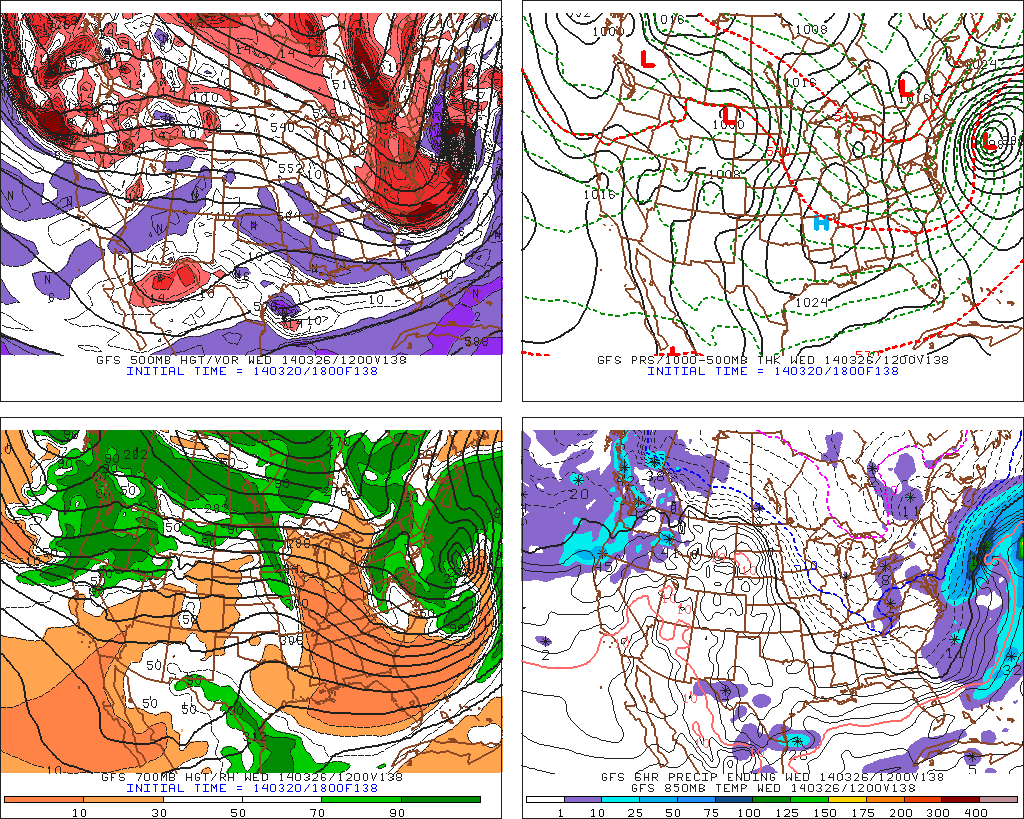
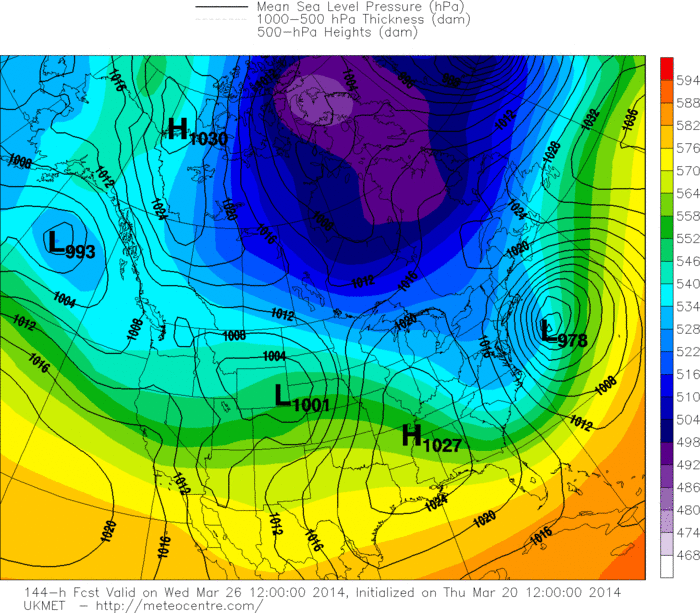
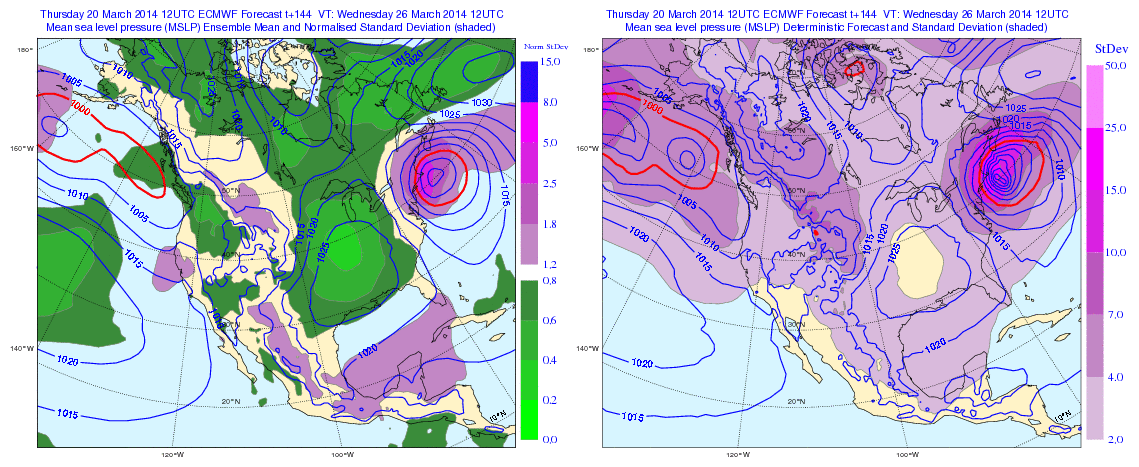
4. PV lobe dropping from Canada. If this feature were to dig into south into Midwest, this would pull trough back west and capture the southern stream low. Resulting a major phasing. Right now, only the GGEM and it’s ensembles shows this scenario.
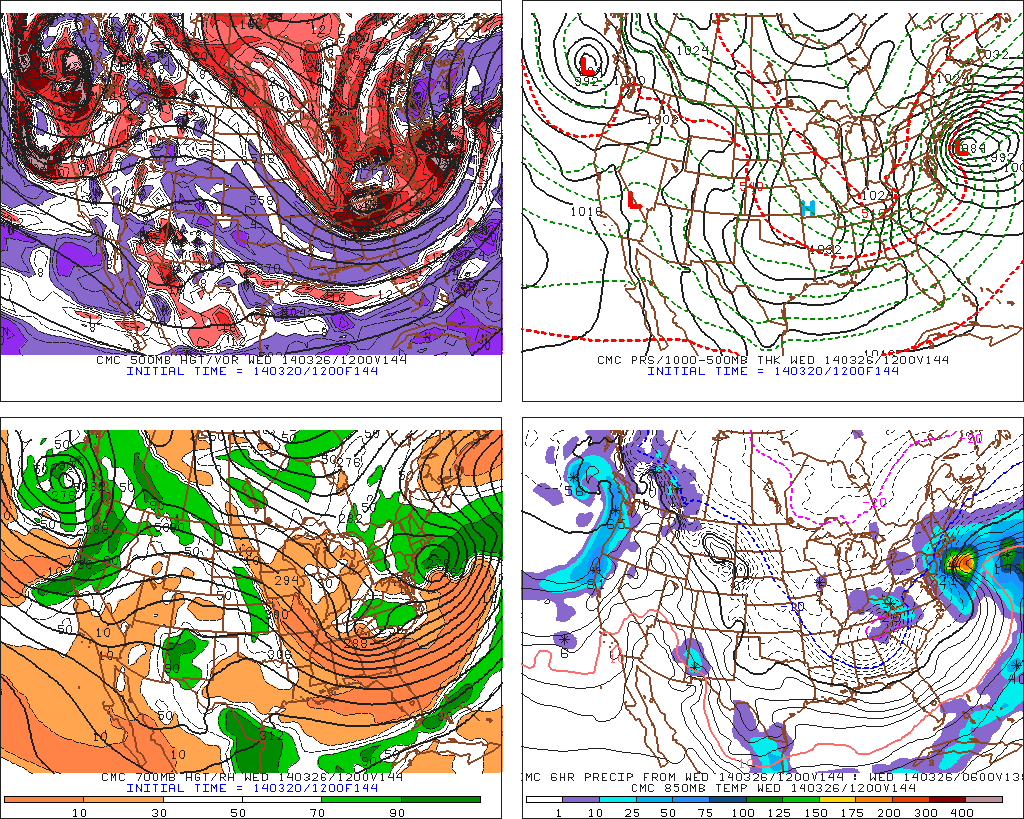 5. High pressure moving out into the Atlantic. Unlike March last week, this will not prevent a more amplifed/phased storm from coming north. The guidance is actually more in agreement here.
These features and more will have an influence on final track and intensity of this storm. So trends with the features on the models, need to be monitored over next few days. Once these are are found, then we can discuss more details. Stay tuned for more blog posts and more frequent updates in the 7-day forecasts.
 Miguel Pierre Weather