So far, this Spring in the Tri-State Area, we have seen more cooler weather, dominate and warmer periods more transient. Last week was another example with Tuesday and Wednesday will very cool, with east winds bringing marine air off the ocean. While Thursday we saw temperatures warm into middle to upper 70s, away from immediate coast. According to a tweet from the National Weather Service in Upton, NY, January to April 2014 averaged below normal for Central Park. The last four-month period to do that,was from April to July 2003. Later this week, looks like more swings with temperature, with the warm front position each day very important. So when will the warmth be here to stay for good?
First we need too look at what has been causing all this huge swings temperatures. The first, most persistent feature, are the above normal sea-surface temperatures in the Northeast Pacific. This enhances a stronger ridge over parts Northeast Pacific Basin, usually ahead of deep trough or low positioned near the Aleutian Islands. This pattern is known as EPO (Eastern Pacific Oscillation), in its negative phase. This is a feature that has been there, since the late fall of 2013.
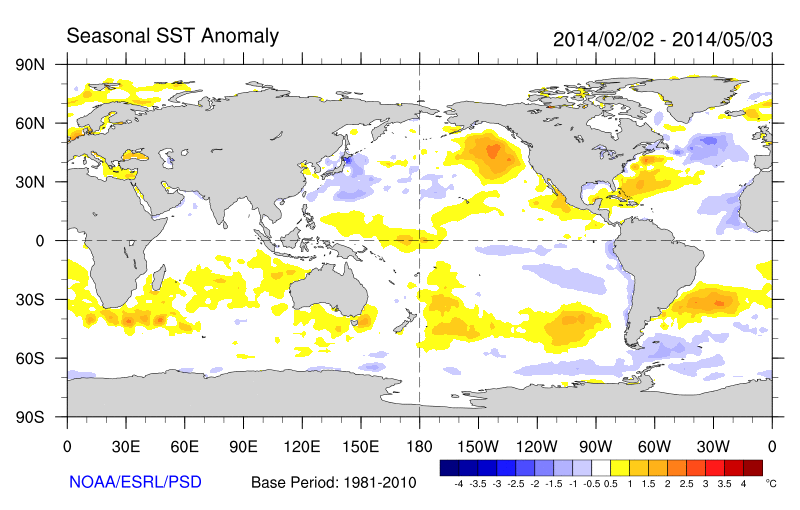
The -EPO ridge often shifts east into West Coast of North America. However, with the lack of sustained blocking on the Atlantic side the pattern remains somewhat progressive. The -EPO ridge shifts east into west coast of North America transforming into +PNA pattern. Then when the next Pacific storm moves in Aleutians/Bering Sea, the -EPO ridge reloads with enhancement from the warm sea-surface temperatures over the Northeast Pacific.
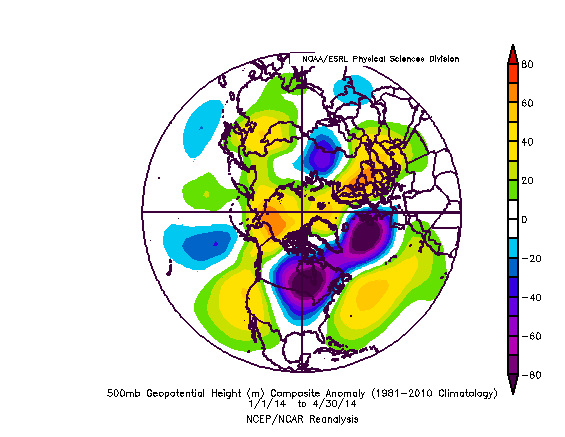
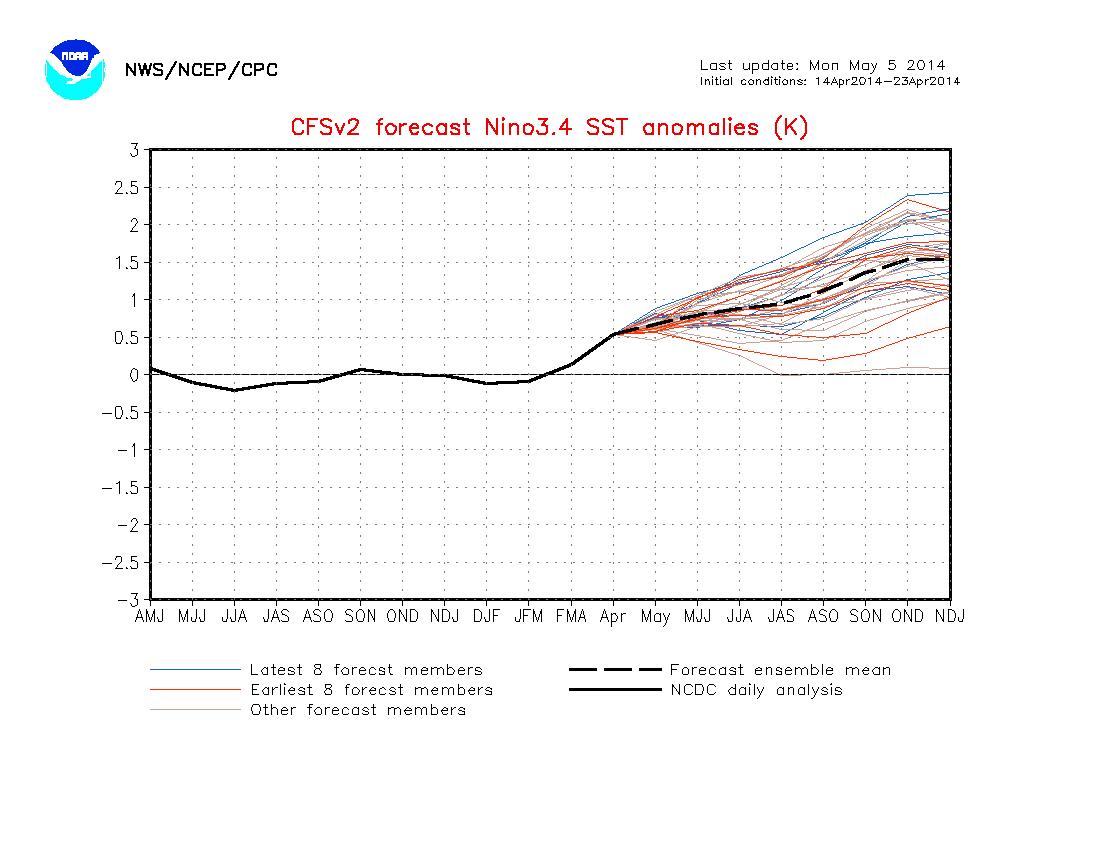
A moderate to strong, El Nino is forecast later this summer. The means we are likely looking at a warm East Pacific Chances are this warm SST anomaly will also persist through the summer and beyond. So the -EPO likely won’t be going away for good, anytime in the near future.
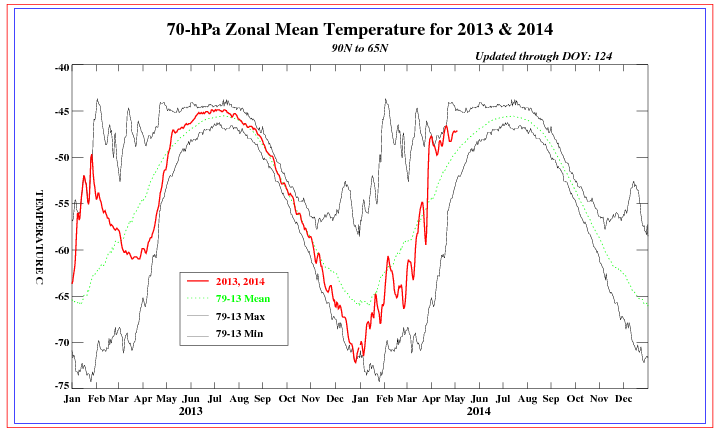
Warmer than average temperatures over also in the lower stratosphere has supported the -AO/-NAO blocking to develop. This has resulted keeping deeper trough over SE Canada or the Northeast for much of this Spring. Although there has been a tendency for the -AO/-NAO blocking to be transient, because there has been a parade of Pacific storms crashing into West Coast. So were not able to lock cooler than normal pattern over the Eastern CONUS either. Instead, we see more volatility with huge swings in temperature.
The models show the AO/NAO rising next two weeks. So that will allow the for another intense, warm surge late this week for Eastern US. However, models now trending stronger with trough over SE Canada. This trough will produce confluence or high pressure over New England and likely force the warm front to stall to our south on Thursday. Keep most of the area in cool, marine airmass with chance of a showers.
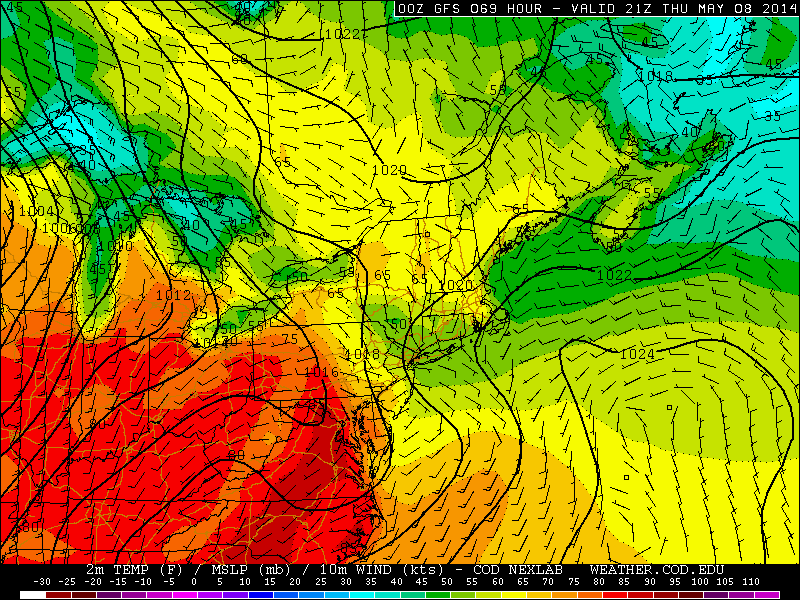
The trough will start shifting east on Friday. Allowing the warm to make more progress northward. We could see big difference in temperatures and sky conditions from SW to NE across the area. More widespread 70 or 80 degree temperatures are more likely this weekend. With a little more sunshine and showers and thunderstorms more widely scattered.
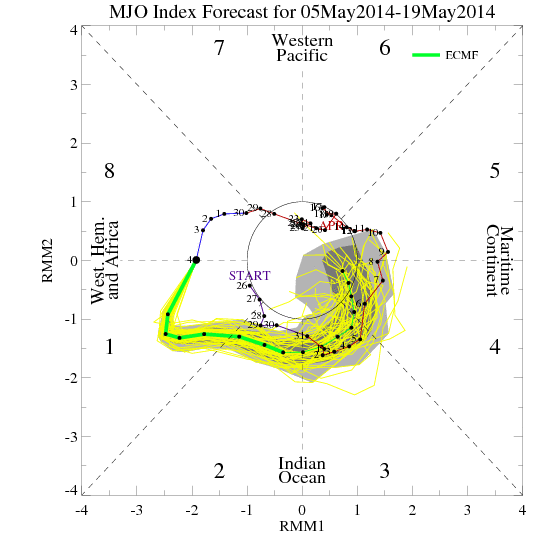
The MJO is now active and will be propagating into phase 2 next week. Which supports another period cooler and wetter weather over the Eastern US, sometime between May 15- 20th period. Beyond that, MJO might get into phases 5 and 6. Which supports longer period of above normal temperatures for much of Central and Eastern CONUS for late this month. With El Nino growing the summer, the MJO is likely to be more active and have some influence on our weather pattern.
As we go later in Spring and Summer, the cold impacts of -EPO/-AO/-NAO gradaully decrease. The supply of cold air begins to run out. The configuration morphs into a pattern that supports warmer west-down slope flow in our region. So will probably warm periods will last longer. However, we still have monitor for troughs over SE Canada or New England to force warm front to stall south of region or to push backdoor cold front in our region. Until mechanisms producing -EPO/-AO/-NAO patterns from to time start to change.
 Miguel Pierre Weather