A deepening low pressure will track into from Central Plains into Western Great Lakes today and tonight. The warm front with moving northward tonight over Mid-Atlantic States. A strengthening southwesterly jet at 850mb to 950mb, help push warm front through region with overnight and early tomorrow morning some rainfall. Precipitable water values increase to over 1.5″, could lead heavy rain at times. Some elevated instability could also support some isolated thunderstorms.
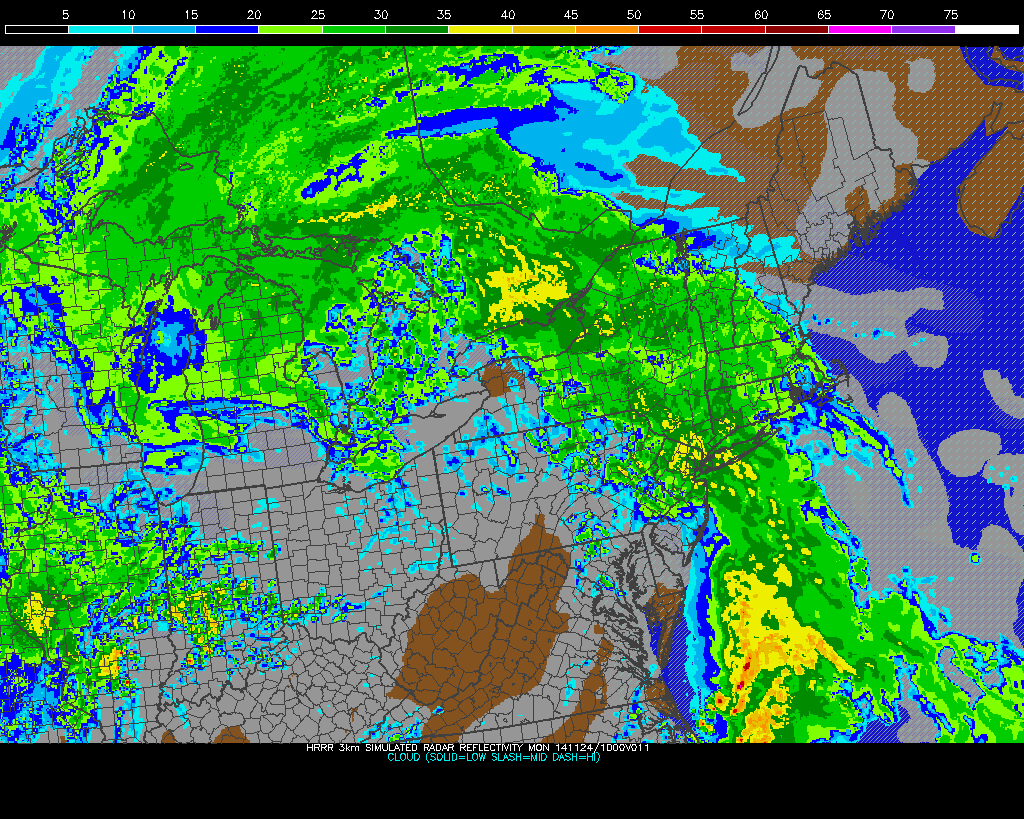
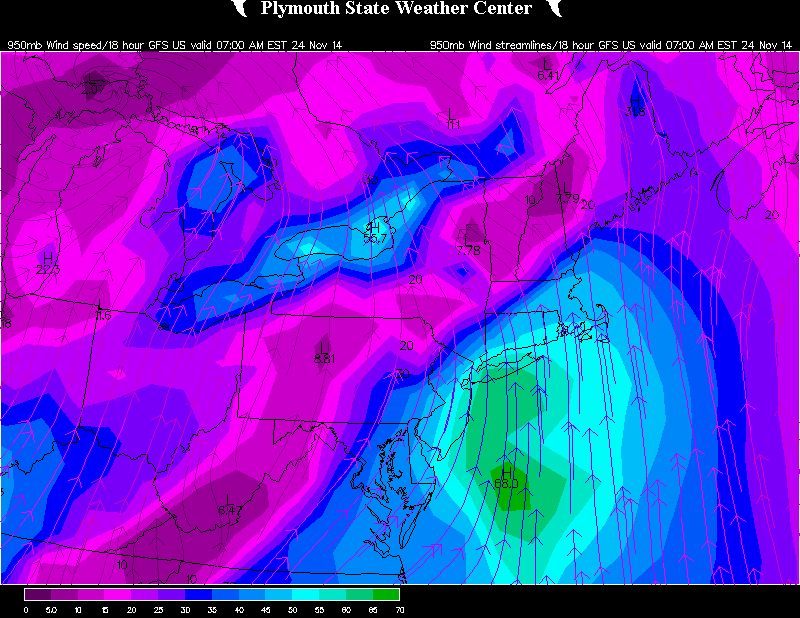
Winds also increase later tonight, with the low-level jet overhead. Models show a weak inversion layer around 900mb, that would prevent strongest winds over 70kts from mixing down to surface. But there winds around 950mb level are at 50kt to 60kts. Heavy rain or isolated thunderstorm could help bring some these winds down to surface. A wind advisory for Long Island, Queens and Brooklyn. Winds are expected to be sustained between 20 to 30mph with gusts to 50mph over New York City and Long Island.
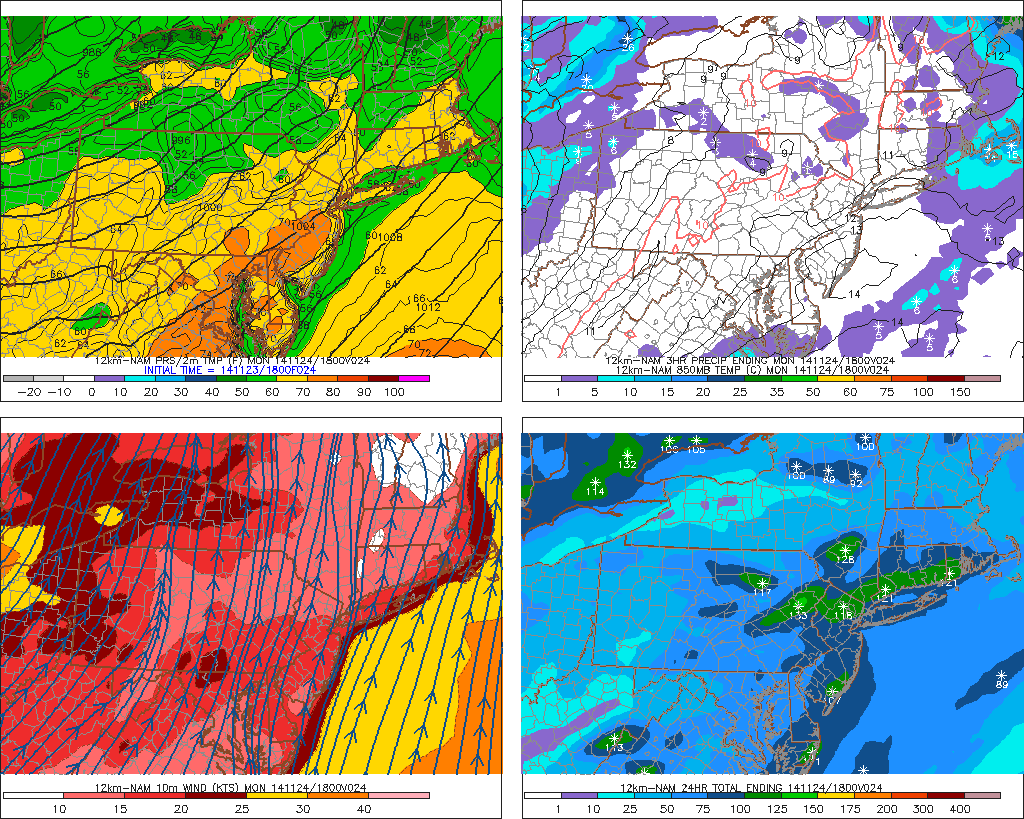
This rain will should end early tomorrow morning as the warm front pushes north of the tri-state area. Clouds should break for some sunshine during the afternoon. We will be in warm sector with strong southwest flow and 850mb temperatures rising to between 12C to 16C during the afternoon hours. This will support unseasonably high temperatures at least in the middle to upper 60s, with mostly cloudy skies expected. If clouds break sunshine tomorrow afternoon, temperatures could rise into lower to middle 70s. Some record highs for tomorrow, may also be in jeopardy.
However, this warmth will be short-lived. A cold front will move across the area tomorrow night. This bring a cooler airmass into the Tri-state region on Tuesday. High temperatures will be in the lower to middle 50s with some sunshine. Which is still several degrees above normal. A stronger cold front will move slowly through area Tuesday night and Wednesday. There will be area an of low pressure developing along cold front to south. This low will turn into a Nor’easter and track up quickly up the East Coast Wednesday afternoon and night. This low will bring some significant precipitation and high winds across the area Wednesday afternoon and Wednesday night. The track, intensity of this low will depend on amount interaction or phasing of polar, pacific, southern disturbances. The 12z GFS tracks thjs storm near or just east of 40/70 benchmark. So that surface N-NE and warm-air advection in mid-levels is weak enough that much of Tri-state area will see an accumulating snow. 12z ECMWF has low track very close NJ and Delmarva coasts, then northward over Long Island and New England. A strong southerly mid-level jet streak associated with storm moves other area. This brings a surge warm-air of aloft that causes any snow to mix with sleet and rain for areas just I-95 corridor. Long Island and NJ shore would likely see mostly rainfall. With perhaps change to snow at the end, as the storm passes to north. Highest elevations of NW NJ and Lower Hudson Valley may still see snow for most of the event, unless the track shifts further west, in future runs.
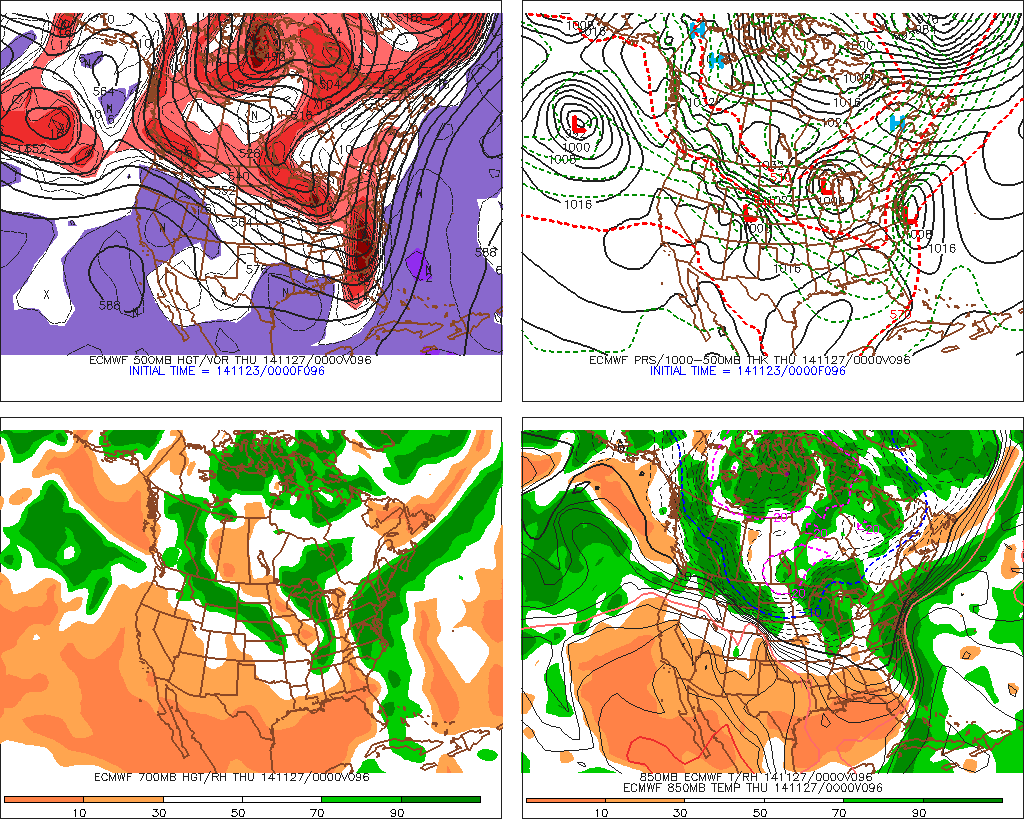
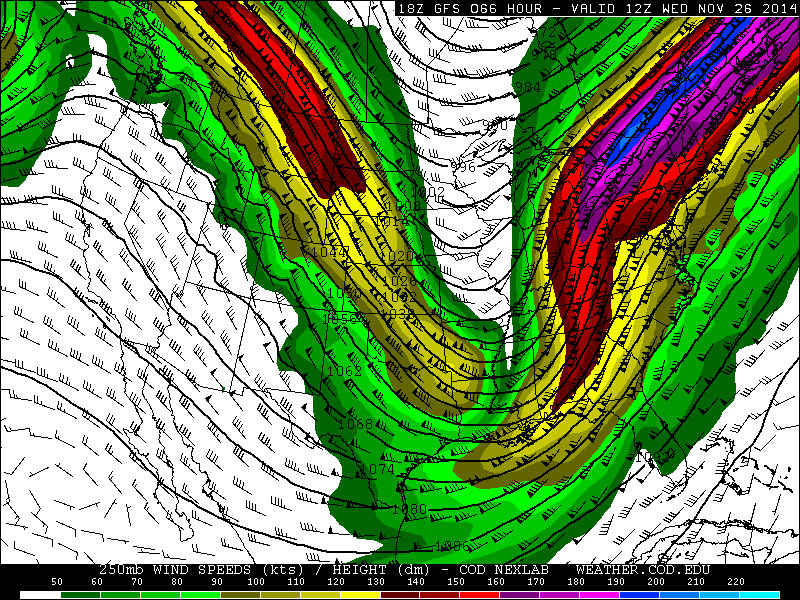
Very strong upper-level streak over 190kts at 250mb, will also support storm deepen rapidly near the Mid-Atlantic coast or over New England. This will also help expand more precipitation to northwest of storm. A few things we need watch for are some strong dynamics and a warm boundary layer. Mid-level frontogenesis might keep heavy snowfall rates and dynamic cooling, before that changes over to sleet or rain. Or behind the storm, a comma-head or deformation band forming with temperatures at surface and aloft crashing and closing off 500mb and 700mb lows. Boundary level or surface temperatures may be issue if the cold arrives more slowly on Wednesday. Sea-surface temperatures just offshore, are running above average for this time of year. So if winds are more out of the northeast to east direction, this will bring warmer air into the coastal regions. These are all possible scenarios. I will have another update on this storm once the 0z runs come out.
 Miguel Pierre Weather