After historic cold air for February, a moderating trend appears to be in store as we go into March. However the threat more winter storms will continue longer. Today most of region misses out on significant snowstorm to our south. Southern New Jersey saw several inches of snow today. While the rest of the area are saw just snow showers or flurries with very little accumulation. The -PNA (negative Pacific North American Oscillation) will support a storm track further north over the Central and Eastern US for the first week of March.
Currently model guidance shows an upper-level shortwave trough and weak surface low pressure moving through late Sunday afternoon and Sunday night. Model thermal profiles support mainly snow from this system from Central New Jersey . Some light to moderate snowfall accumulations are possible here. This will be fast mover and not a big storm. But light to moderate snowfall accumulations will be possible. This could make for Monday morning commute to work or school hazardous. Again this event just a possibility. We will have to monitor future models for more consistency and details. A small change in the track or strength of this system could result in less precipitation or more of a wintry mix for parts of the area.

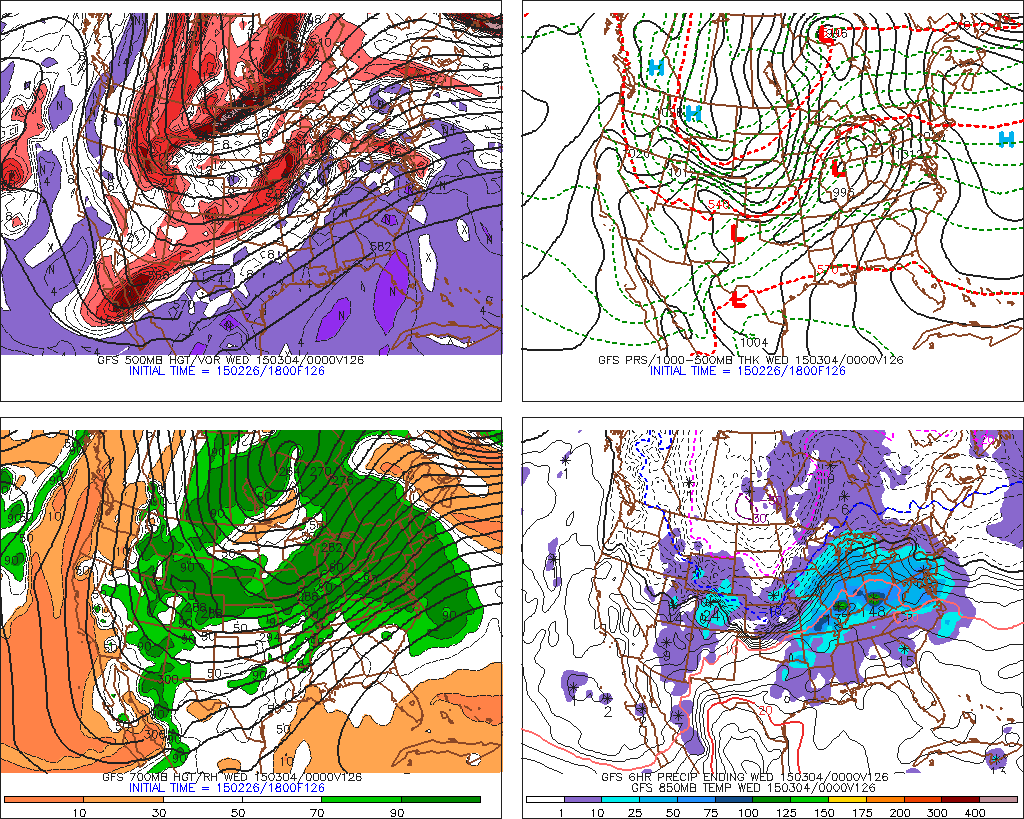
Model guidance is also showing a much larger storm system coming out of the Central Plains, Tuesday afternoon into Wednesday for the Northeast and Mid-Atlantic regions. Some very cold will be already in place on Tuesday morning in the Tri-state area. But the model consensus today is for this storm to to track to over to our west over the Ohio Valley and Great Lakes. Which brings low-level and mid-level warming for any snow and ice to change to rain by late Tuesday night or early Wednesday morning. At this time, the pattern shown on the models would support this solution. There is a deep trough over West Coast and strong ridge over the Southeast US. There is also upper-level low over Western Canada and the could pull this storm further north. The polar vortex is also lifting out SE Canada quickly, without enough high-latitude blocking. However, there is still plenty of time for details to change. For example, if Sunday night system is stronger and phasing with the polar vortex over Southeast Canada, this could cause more confluence and cold high pressure over Northeast. That would force a secondary low off too form off the East coast and at least slow down the warm air intrusion. This would result in heavier snowfall totals or more significant icing. It is possible, the models may not catch on to a solution like this until Monday. I will continue to monitor this system through early next week for any significant changes
 Miguel Pierre Weather