First Snowflakes Likely Tonight for the Tri-State Area

Many of us, especially if we are up past midnight, we’ll likely see our first snowflakes tonight for the upcoming winter season An upper-level disturbance (shortwave trough) and wave low pressure form well off the coast will produce some light precipitation area tonight and early tomorrow morning. The low offshore will develop to late for our area to have more significant impacts. But this low will help transport some moisture off the Atlantic into region.  Lifting ahead of shortwave trough with be increasing, due to a strengthening mid-level jet streak and mid-level frontogenesis, will cause light rain and snow throughout the area tonight.
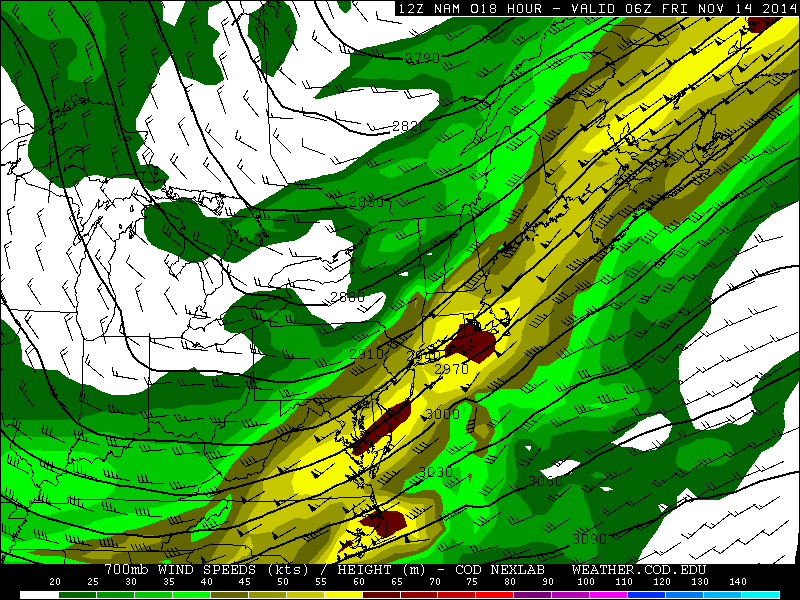
12z NAM strengthen 700mb jet sreak
12z NAM showing a strengthening  jet streak at 700mb (10,000 ft)
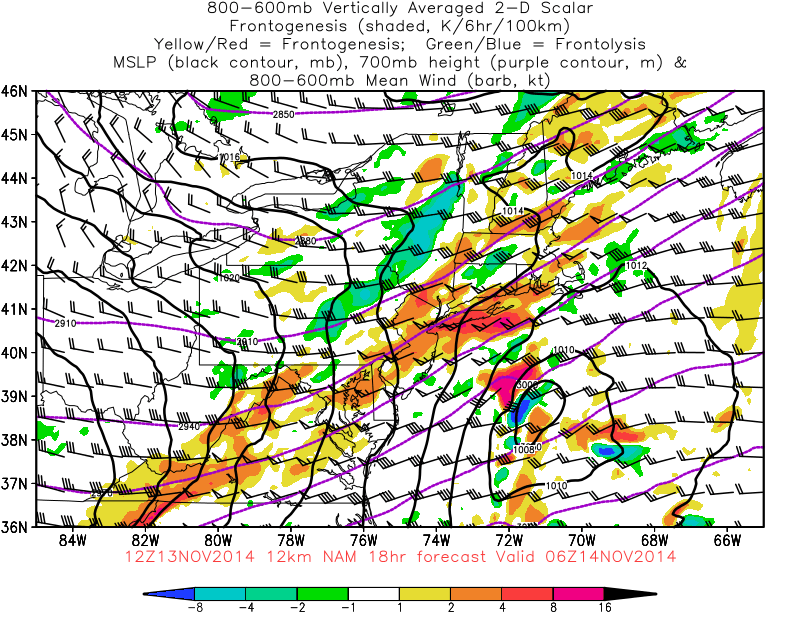
12z NAM showing moderate frontogenesis over the Tri-State area from 600mb to 800mb

Precipitation will start as wet snow or a brief mix of snow and rain for the inland areas north and west of New York City this evening. For coastal locations, temperatures aloft at 925 mb (2,500 ft) will be initially be warm enough for rain. Then as colder air will continue filtering into region overnight that rain should mix and change to wet snow before tapering off around daybreak. As temperatures drop into lower or middle 30s. Inland areas north and west of New York City, could start see snow accumulate on untreated roads, car tops, grassy areas, and other colder surfaces. A coating to 1″ is possible for these areas. For New York City and other coastal locations, surface temperatures will only drop into middle to upper 30s, before precipitation ends. So very little if any accumulation is expected, for these areas.

High resolution models 4km NMM and ARW showing snow
High resolution models the NMM and ARW showing rain changing to snow for a few hours after midnight down in the tri-state region

This entire system move out early tomorrow morning. Expect skies to clear for sunshine. But with a cold airmass in place, high temperatures will only get into lower to mid 40s in the afternoon. Saturday looks to be mostly sunny and cold as with high temperatures only in the upper 30s to lower 40s.
Mild Temperatures Through Wednesday, Artic Air Arrives By Friday

Today’s temperatures rose in the lower 60s. Tuesday and Wednesday high temperatures will also be in lower to middle 60s. As we remain in a mild airmass, in advance of artic blast later this week. We will be in between two systems Tuesday night and Wednesday. A low moving over the Great Lakes and coastal storm moving well southeast of the area. A surface trough extending from the offshore storm and cold front from the Great Lakes low could produce some scattered showers in the Tri-State area, during this time frame.

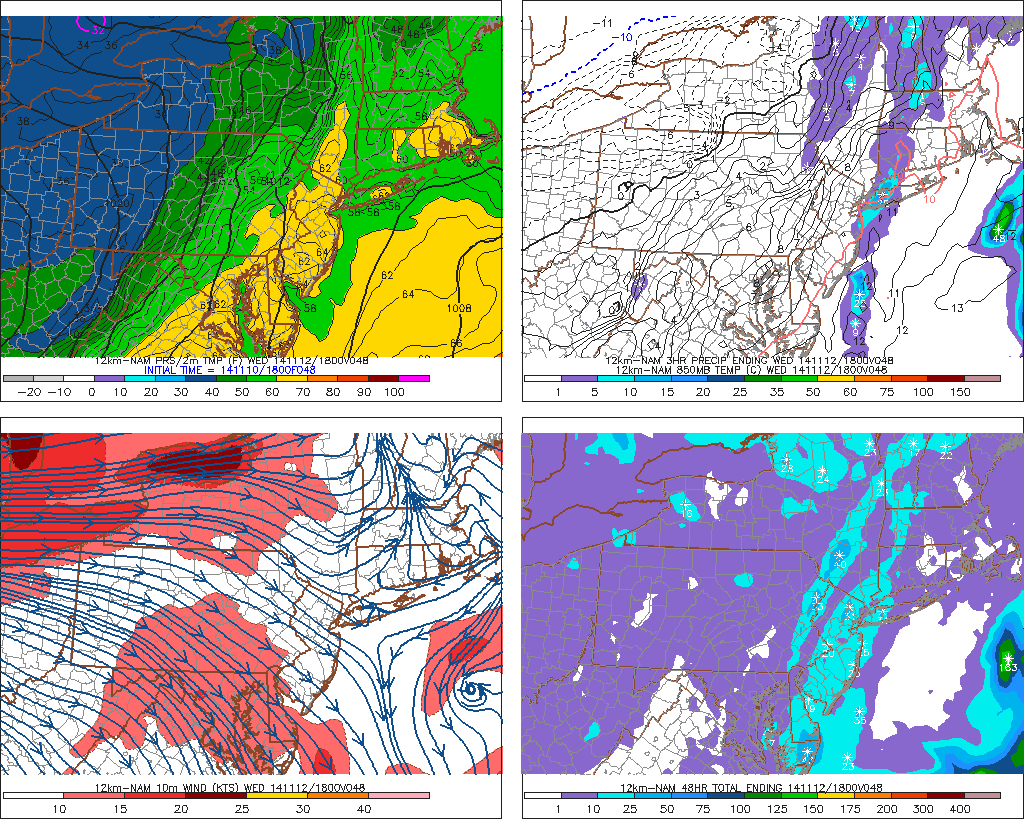
The NAM showing tempeatures in lower 60s and scattered showers  in parts of the area on Wednesday.
The NAM showing temperatures in lower 60s and scattered showers in parts of the area on Wednesday

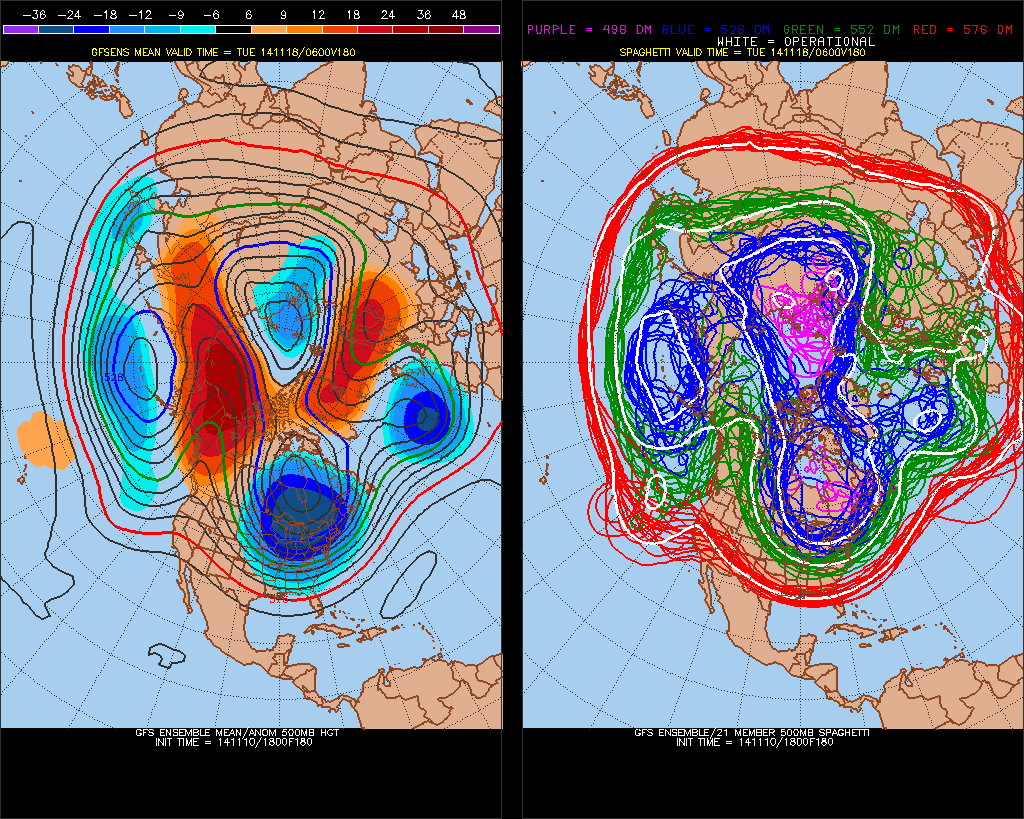
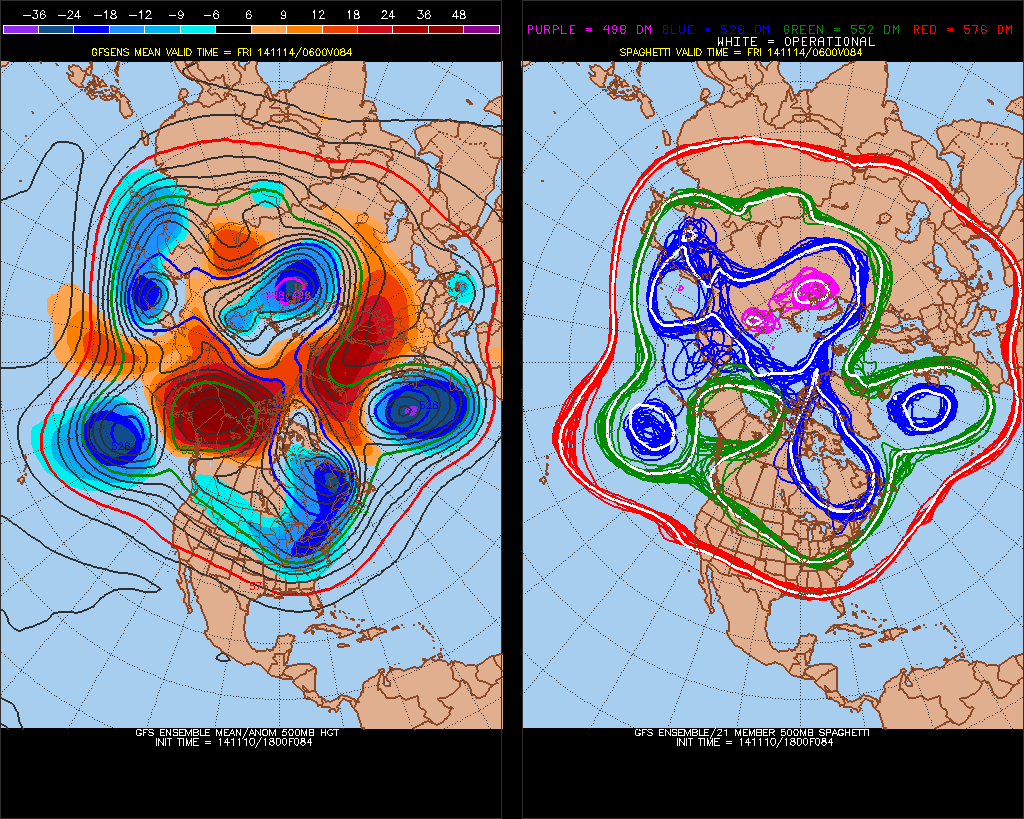
The models continue to show artic air pouring into the United States mainland this week. For the Tri-state area this will be a little delayed until the end of this week.  A huge blocking ridge developing over Alaska and NW Canada early this week, will the cause a trough with artic air to dump into Rockies and Midwest. This block was enhanced by the remnants of Supper Typhoon Nuri transitioning into the deepest extratropical storm, in the North Pacific, recorded. This trough will then move east, with strong cold front passing through Thursday night. Some light snow and rain is possible with front and upper-level disturbance. Surface temperatures will likely be too warm for any snowfall accumulations. Colder air will follow behind this front later Friday and Saturday.  Temperatures expected to be upper 30s to lower 40s for highs and morning lows in upper 20s to lower 30s. This is not brutal cold. But well below normal for mid-November.

The GEFS at 500mb. A blocking ridge over Alaska and Northwest Canada (known as -EPO). Positive height anomalies extending into Greenland and Iceland (known as an east-based -NAO)
The GEFS at 500mb. A blocking ridge over Alaska and Northwest Canada (known as -EPO). Also, positive height anomalies extending into Greenland and Iceland (known as an east-based -NAO)

Another low over Great Lakes will be moving toward the east coast on Sunday. A secondary wave of low pressure will also be forming near Mid-Atlantic coast on Sunday. Some precipitation is likely for either or both systems sometime Sunday into next Monday. However, a southeasterly flow with a cold high moving offshore, will likely mean many areas will warm up enough for mostly rainfall.  Behind these systems is another anomalous cold airmass for this time of year. The -EPO ridge will also polar vortex drop over James Bay and an associated trough to dig into the Central and Eastern US. The east-based -NAO cause this trough to remain in place until the end of next week.

The GEFS showing the polar vortex over James Bay and trough over the Central and Eastern US.
The GEFS showing the polar vortex over James Bay and trough over the Central and Eastern US next Tuesday

The polar vortex begins to lift out and elongate or split, at the end of next week. We will see temperatures moderate to back to normal. Meanwhile, subtropical disturbance will eject out Southwest US later next week. This disturbance could organize into a significant winter storm parts of the Northeast and Mid-Atlantic regions during the Nov. 20-23 period.  At this time, model or ensemble guidance is not going to resolve the details of this possible system. So I will watch for trends to develop on models through this week and beyond. But with such anomalous high-latitude blocking being forecast, going into late November, the chances for more wintry weather will likely increase.

Strong Winds and Chilly Tempartures Today

A strong inverted trough with storm moving offshore yesterday brought significant rainfall to parts of the Tri-State area yesterday. Parts South-Central NJ coast saw rainfall totals over between 2.00″ to 3.50″.Further north into NYC, JFK saw around 1.00″ total. As the storm offshore began to intensify winds have increased during the overnight hours. Wind gusts have gusts between 35mph to 45mph overnight. As the pressure gradient increases today, winds are expected to frequently gust between 40mph and 50mph during the day today, Daytime heating and cold air aloft will also steepen lapse rates that will cause stronger winds aloft to mix down to surface. For these reasons, the National Weather Service in Upton,NY has issued wind advisories until 6pm today, for New York City, Long Island, Extreme Northeast NJ, Southern Westchester and Coastal Connecticut. Marathon runners will more challenging weather conditions to deal with this year. Some isolated or occasional wind gusts a little over 50mph are possible as well. Especially over Long Island and Connecticut this afternoon.

This storm has also brought some colder air behind it. High temperatures will likely be middle to upper 40s, despite sunshine, as cold air convection continues through the day. Tonight some inland areas just outside of New York City, might see their first frost or freeze, as temperatures drop into upper 20 to lower 30s in those areas. For this reason, freeze warnings have been from 3am to 8am tonight, for parts of Northeast NJ and the Lower Hudson Valley. Temperatures tonight along the coastal plain will only drop into low to middle 30s.