Tropical Update: Edouard & Invests 92L & 93L

Hurricane Season has relatively quiet so far. The main reason are that the subtropical high has been stronger parts of Central and Eastern Atlantic this year. This causes stronger easterly shear and more dust off Africa . Which inhibits more developing tropical waves moving Africa coast. Stronger high over East Atlantic, also  allow more troughs or upper-level lows persist over Western Atlantic. Which cause more shear and dry air or tropical systems to recurve out to sea. This pattern continues as watch a few new systems in the Atlantic basin.
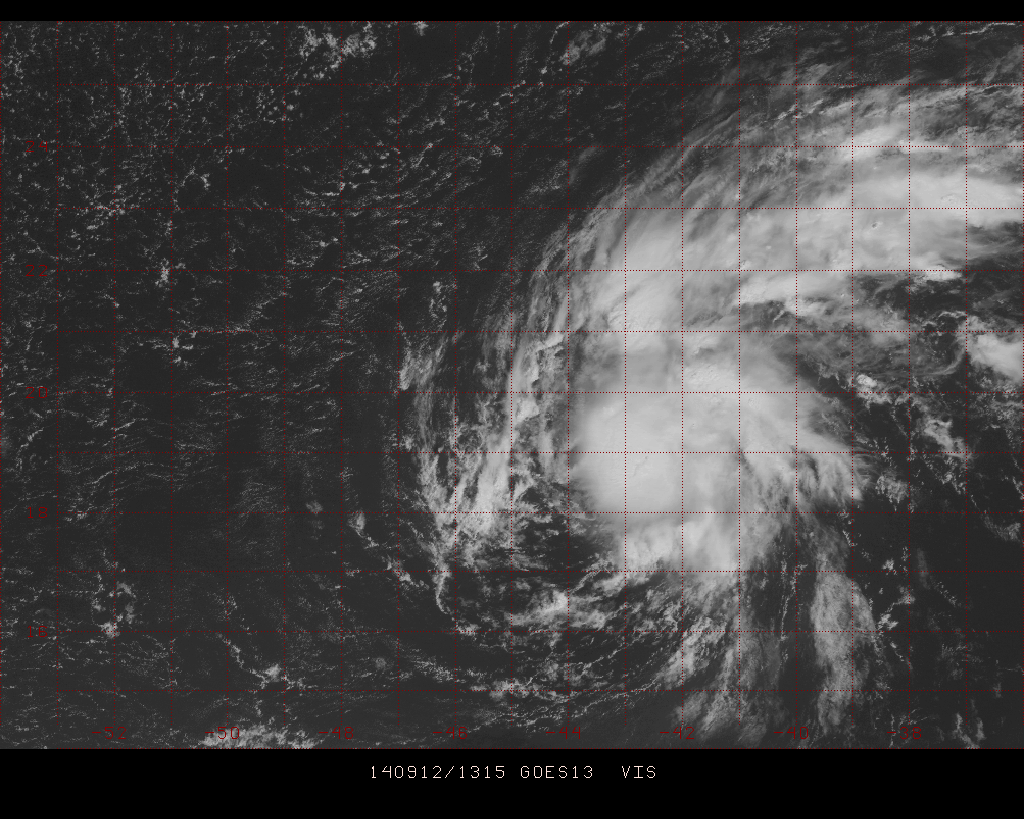
This morning visible Image of Tropical Storm Edouard from PSU Ewall

Tropical Storm Edouard (as seen above) has formed in Central Atlantic. As of the 5am ET advisory from the National Hurricane Center, Edouard is about 1325 miles east of Leeward Islands and moving west-northwest at 15mph. Maximum sustained winds are at 45mph. Currently the storm is encountering some moderate southwesterly shear. Which is restricting outflow on the western side. Slow strengthening still is expected over the next 5 days and it could become a hurricane. However it will pose no threat to land / All models are agreement that Edouard will turn north then northeast, between 50W and 60W.  As deep trough moves into Eastern US and Western Atlantic early next week.
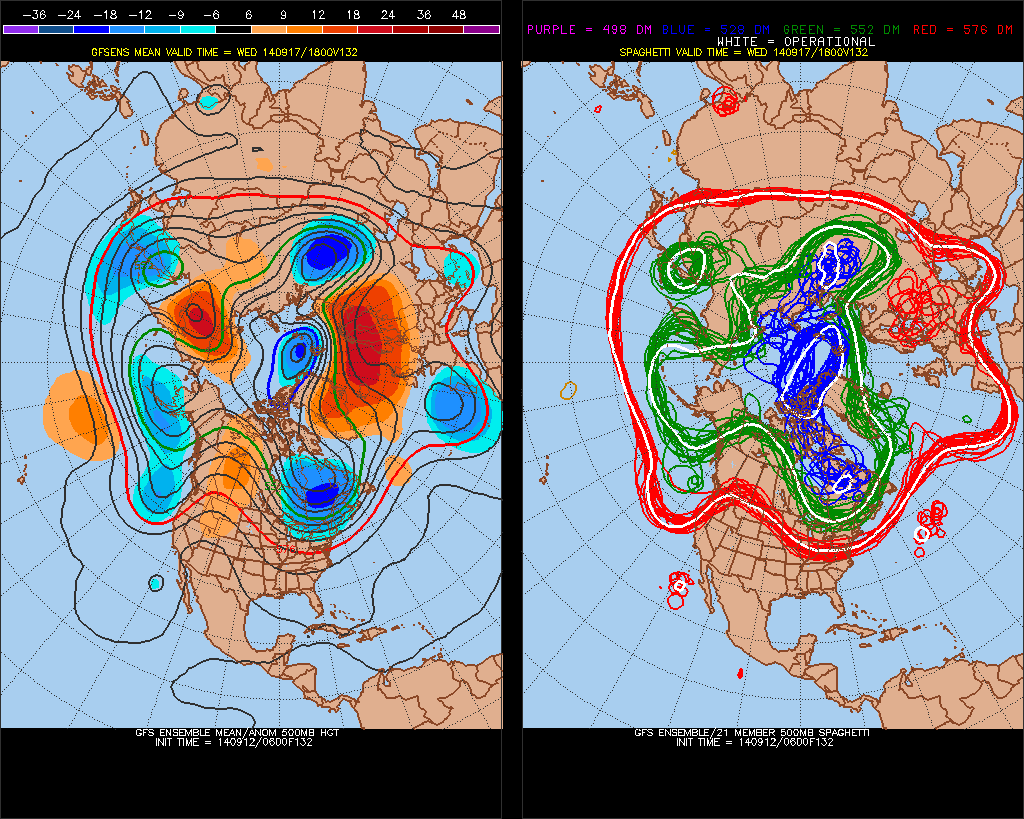
6z GFS ensemble mean from PSU ewall
6z GFS ensemble mean showing a West Coast Ridge producing a large, deep trough over eastern US and Western Atlantic from PSU ewall

Another area of interest this morning, is a tropical disturbance labeled Invest 92L. Which is moving over Florida. Land interaction and some strong southwesterly shear now will inhibit further development until it moves over Gulf Mexico later tonight or tomorrow. The models eventually take 92L westward into Western or Central Gulf of Mexico over next 3-5 days. Upper-level winds on the models look favorable some slow development into a tropical depression or  tropical storm. So areas along Western and Central Gulf coast should keep an eye on this disturbance.
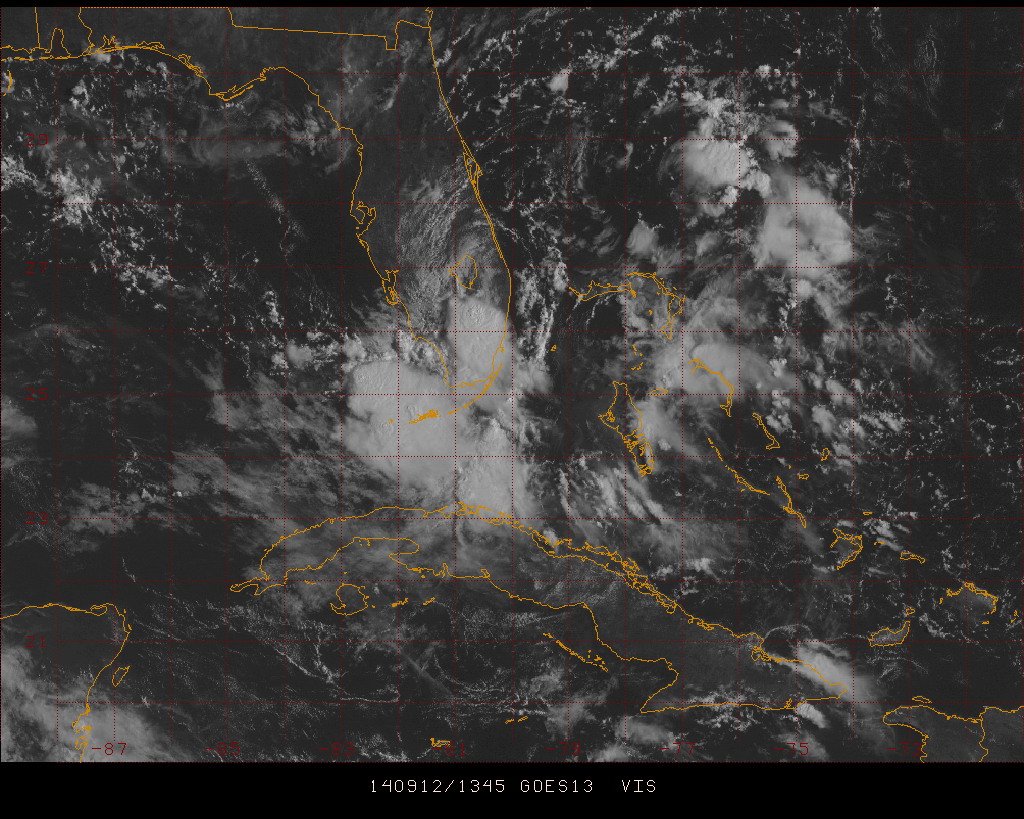
Visible of nvest 93L over Florida form PSU Ewall

A tropical wave in Cape Verde has shown some signs of organization and been labeled as Invest 93L this morning. It’s too soon to say what the fate of this wave will be, with much confidence. But first generally have it tracking to west to northwest, over  the next five days. Posing no threat to land.
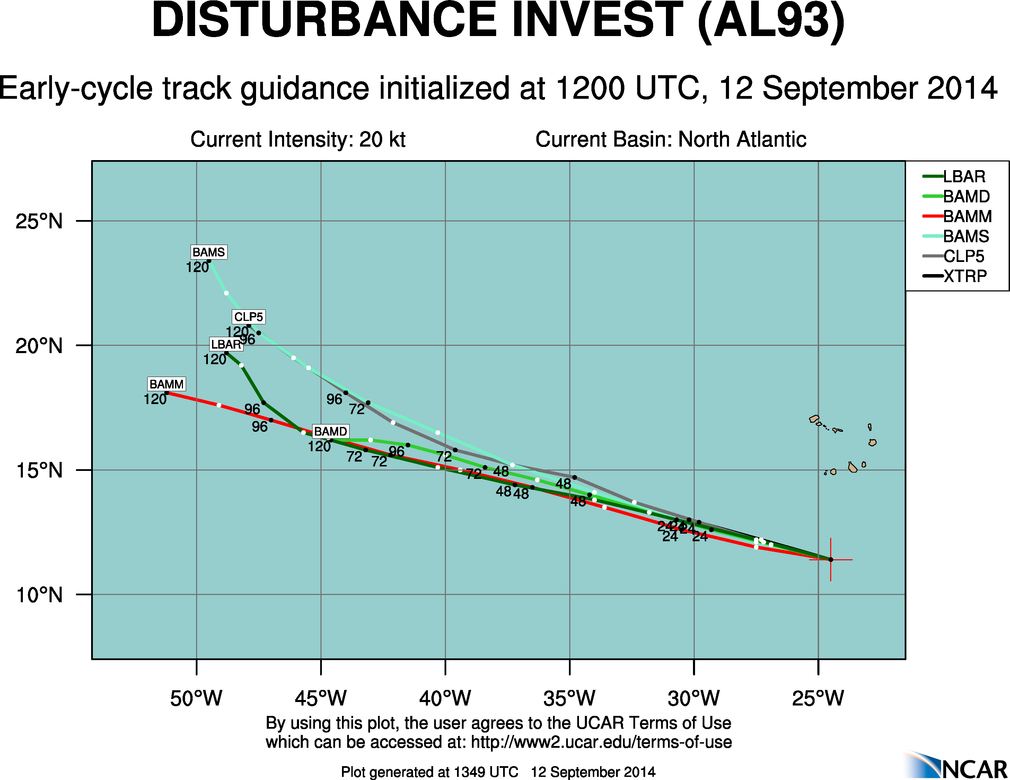
aal93_2014091212_track_early

Why Models Show Less T-Storms Late Today

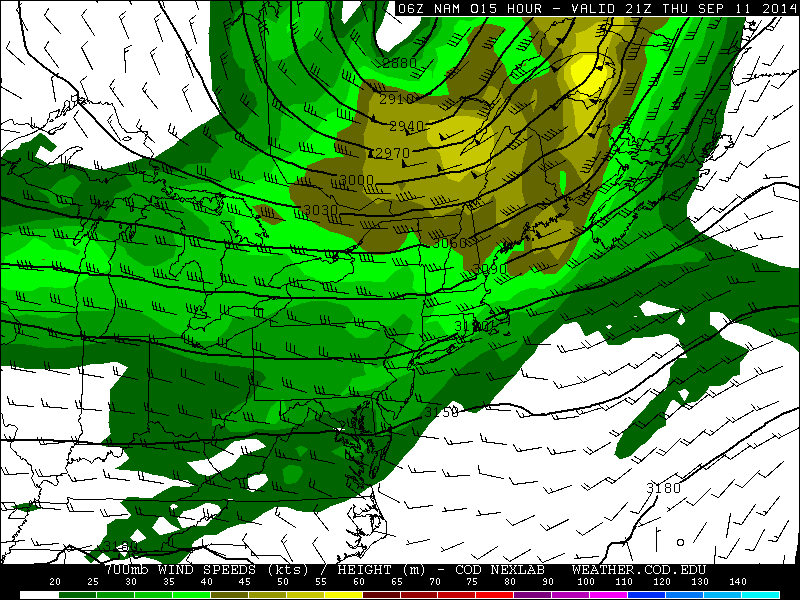
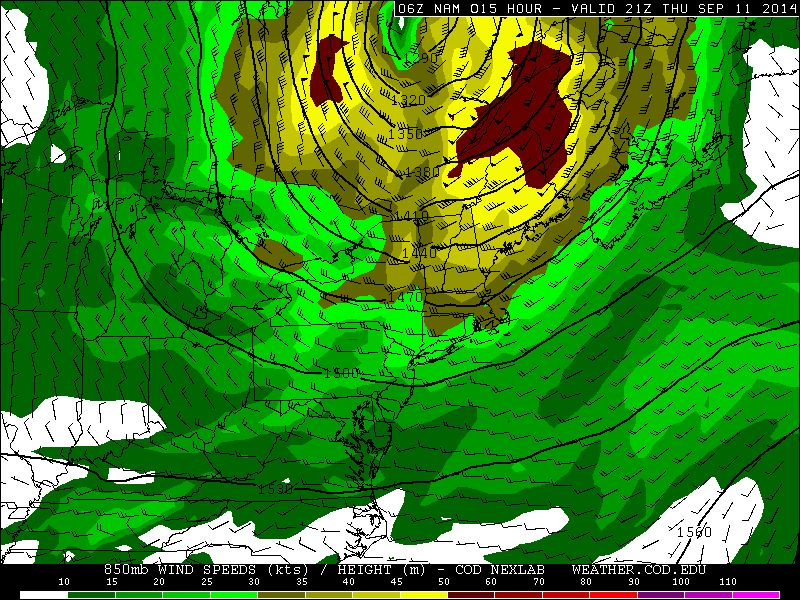
If you are looking the qpf or simulated radar models this morning, you will notice the lack of t-storms today for the tri-state area. There a number of reasons why. First the NAM (as well as other models)show the core of 700-850mb jet streak over Northern parts of New England. On the left-rear side are westerly winds causing the air to dry and sink at the level, over the tri-state area. This will tend to suppress more thunderstorm development late this afternoon:

6znamNE_700_spd_015

6znamNE_850_spd_015

Models also show more instability, particularly CAPE over the Lower Mid-Atlantic region. Which is why the models like the NAM show more showers and thunderstorm forming along the cold front to the south of tri-state area. From experience, thunderstorm tend congregate in areas where more parameters, such as lift and instability are supportive. I still expect some showers and t-storms this afternoon. But over the tri-state area, there will be likely be more widely scattered with perhaps some isolated strong wind gusts. The chance of thunderstorms to reach severe levels are still very low. Latest guidance shows 0-6km shear increasing to 30kts to 40kts with a 50-60kt 500mb jet streak approach from north and west this afternoon. Which is not enough CAPE to support many tall or strong updrafts.  Poor lapse rates and some cloud cover and onshore winds for the coast, will likely limit the amount of the instability this afternoon. As well reduce the ability for thunderstorms to produce damaging wind gusts. Pwats are still very high over 2.00″. So any thunderstorm is still capable of produce heavy rainfall and flash flooding poor drainage areas:

6znamNE_con_sbcape_015NY.vis

Warmer & Humid Tomorrow with PM T-Storms

A warm front move through the area tomorrow morning with some clouds. Winds turn more southwesterly south of this front, transporting a much warmer and humid airmass.  Temperatures over New York City and much of New Jersey will rise into the middle to upper 80s. However, this will be short-lived as a cold front will moving through the area tomorrow evening with some scattered showers and thunderstorms.

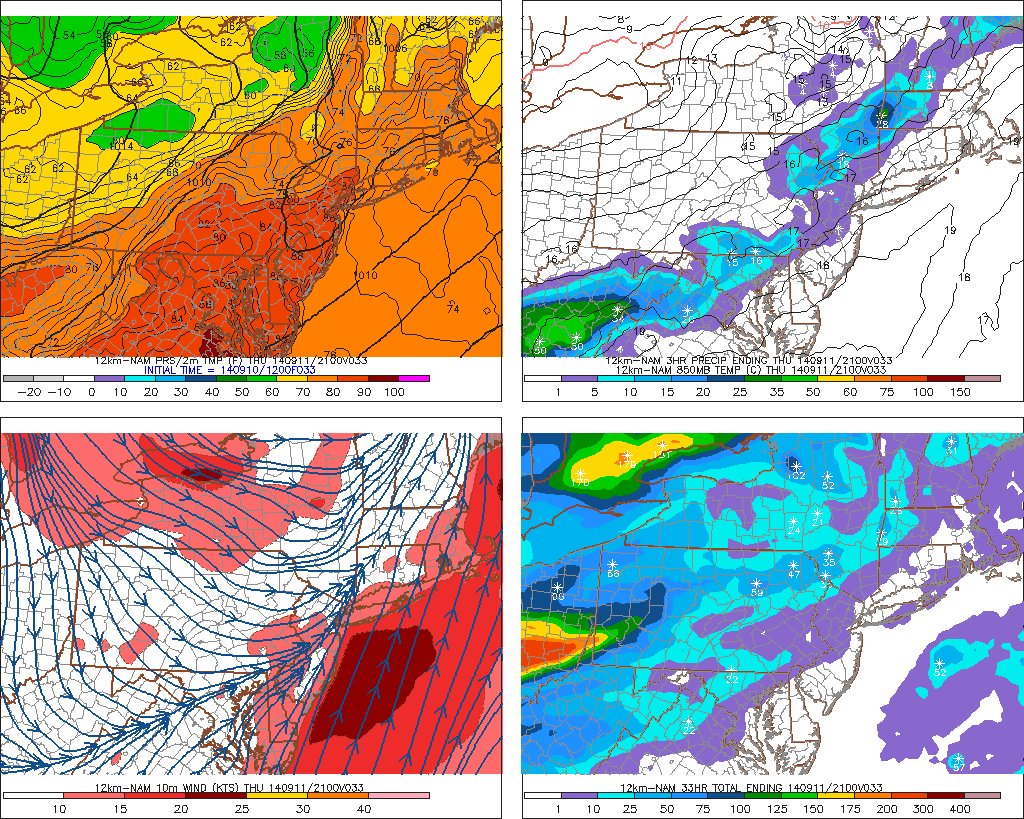
The 12z NAM models showing 80s for highs over much of NJ and NYC, with southwest winds. Then some showers or thunderstorms for the northwest.

The Storm Prediction Center had issued a slight risk early this morning for these t-storms tomorrow. This was mainly in the warm sector, when instability is more likely to support severe thunderstorms. However, this afternoon look as removed the slight risk entirely. Regardless of what SPC issues, there are some factors going against widespread severe weather. Mid-level lapse rates are poor with a mostly west to southwest flow aloft. While 0-3km helicity values are in 150 m2/s2 to 200 ms/s2 late tomorrow, 0-6km bulk shear is between 25kt to 30kts with 500mb winds a little weak in the area. Clouds in the warm sector also an issue with getting more extreme CAPE values. Some models show SBCAPE near 1000 J/kg over Central and Northern New Jersey. But MLCAPE and NCAPE values are lower. This suggests CAPE will be skinny and will not support very tall updrafts. Southeast winds or sea-brezzes ahead of the warm may also keeps parts of Long Island and NJ shore, in more stable airmass. Which supports thunderstorms to weaken in this area. All this considered, I think will any severe weather will be very low and isolated. Some t-storms might strong enough produce wind gusts near 40mph. There is also very small possibility of very weak spinups (tornadoes) along the warm front nearby). But without more instability, this threat is not heightened here. Models do show very high precipitable water values over 2.20″. So any thunderstorm will be capable produce some very heavy rainfall with flash flooding in poor drainage areas.

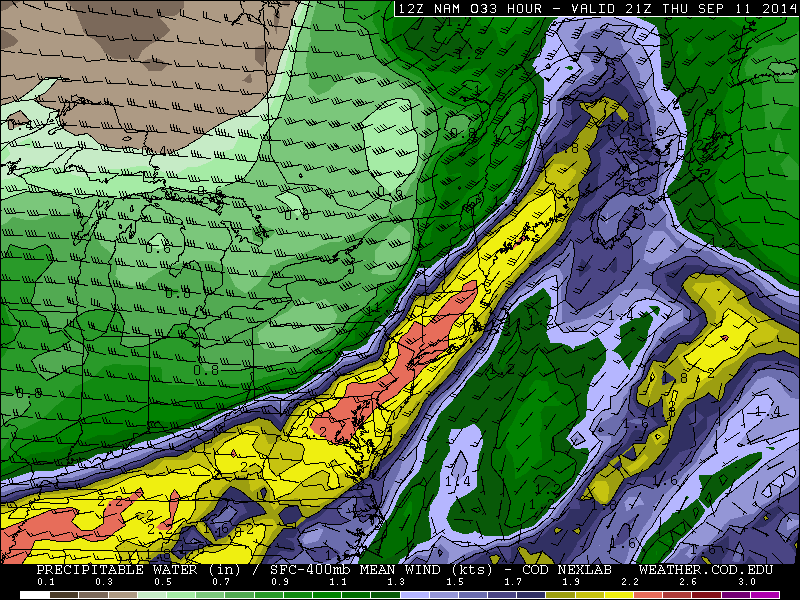
12z NAM today precipitable water values over 2.20"+
12z NAM today precipitable water values over 2.20″+

Showers and thunderstorms will taper off later tomorrow night and clearing will take place late. A cooler and less humid airmass is in store starting on Friday. High temperatures will only reach the lower to middle 70s, despite alot of sun. Some uncertainty continues over the weekend as models stall this cold just off the Mid-Atlantic coast on Sunday. Then move a number of waves north up this frontal boundary through early next week. Details will be fine tuned as we get closer.